
The complete guide to driving in France for UK travellers
When driving in France, UK travellers must bring:
- Their valid driving licence, passport and V5 registration document
- Proof of insurance, UK sticker, Crit’Air sticker and proof of accommodation
Whether you’re travelling for work, on a family holiday or finally completing that dream road trip, driving in a different country can be both nerve wracking and thrilling. Fortunately, driving in France is quite similar to motoring around the UK, but it’s vital to be aware of several major differences before hitting the road.
Here’s everything you need to know about driving in France as a UK traveller.
Documents and requirements for driving in France
When motoring back home, you can set off on any journey with just your driving licence. But UK travellers planning to drive in France will need to pack some extra documents.
Here’s a handy driving in France checklist to make sure you don’t forget anything.
Valid driving licence
You will need to present your full, valid UK driving licence in order to motor around France.
Passport
The driver and passengers in your vehicle must all carry an up-to-date passport. The passports must all be issued less than ten years before the date you arrive in France, and be valid for at least three months after you plan to leave.
V5 registration document
If you’re driving your own car in France, you’ll need to bring your V5 registration document (officially known as a V5C). This is simply another name for your logbook, which serves as proof of your vehicle registration and includes details about the car and its registered keeper.
Proof of Insurance
Planning on driving a UK car in France? It’s vital to ensure you have at least the minimum third party cover required to drive in the European country, and bring your insurance documents along for the ride. If you’re hiring a car, you can arrange your level of insurance with your car rental provider.
UK sticker
You must display the UK identifier on your car when driving a vehicle that has been registered in the UK in France.
Your number plate may already include the UK identifier alongside a Union Jack, in which case you don’t need an extra UK sticker. However, if it has any other combination of letters and symbols – such as a GB identifier, or a national flag of England, Scotland or Wales – you’ll need to affix a UK sticker for driving in France.

Crit’Air sticker
Crit’Air vignettes are French clean air stickers that rate your car based on its air pollutant emissions. Generally, the least polluting vehicles are allowed to drive around France more freely than those that are worse for the environment.
There are six categories of Crit’Air stickers, ranging from green (the least polluting vehicles) to a dark grey sticker (the most polluting vehicles).
You will need to attach the relevant vignette to your windscreen in order to drive and park in low emission zones in France. These zones are typically found within cities. You can order a vignette from the French government website.
International Driving Permit (IDP)
UK licence holders may need an International Driving Permit (IDP) to hire a car in France (check with your car rental provider before setting off), but they should not need one to drive their own vehicle in the country during short stays of up to 90 days.
An IDP is essentially a translation of your UK driving licence. If you do need one, you can pick one up ahead of your trip at your nearest PayPoint store. Bring along your full, valid driving licence, a passport photo, the £5.50 application fee, and – if you have a paper licence – your original passport as proof of ID. The store should be able to process your IDP on the spot.
Proof of accommodation
You may be asked for proof of accommodation at borders, so it’s a good idea to keep one handy. This could take the form of your hotel reservation, proof of ownership of a second home in France, or an attestation d'accueil (a certificate of reception) if you’re staying with friends and family. Bear in mind that you’re more likely to be asked for proof of accommodation if you’re planning a longer stay in France.
Special considerations for driving in France for UK drivers

Driving in France is, in many ways, similar to driving back home. However, there are several key differences that UK drivers must take note of before crossing the border.
So, what do you need for driving in France?
Headlight beam deflectors
If you’re driving your own car – or any right-hand drive vehicle – in France, you’ll need to adjust your headlights. This is because UK vehicles are designed to be driven on the left, with headlights that are angled slightly towards the kerb (on the left) in order to illuminate road signs and verges. However, drive that same car on the right-hand side of the road and your headlights will dazzle oncoming traffic.
Some cars have a setting that allows you to switch between left-hand drive and right-hand drive headlight beam patterns. Other manufacturers use a flat beam, which just shines forward. In these cases you won’t need deflectors.
However, most UK drivers will need to invest in and fit headlight beam deflectors before setting off for the continent.
High-vis jacket and warning triangle
When driving in France, it’s a legal requirement to carry one high-vis jacket for every occupant of a vehicle. These jackets must be stored within easy reach (not in the boot), and worn in the case of breakdown or emergency.
So what else should you pack in your driving in France kit? You must also keep a warning triangle in the car. It’s recommended you place this warning triangle at least 30 metres away from your vehicle to warn the traffic behind you if you break down or experience a collision.
Breathalyser
While breathalyser kits are no longer mandatory for driving in France, they remain highly recommended. This is especially useful for UK drivers, as the alcohol limit for motoring is lower in France than it is back home.
In France, the legal blood alcohol content (BAC) is 0.05%, dropping to 0.02% for drivers with less than three years’ experience on the roads. This compares to the blanket BAC limit of 0.08% in England, Wales and Northern Ireland. In Scotland, the BAC limit is also 0.05%. The safest option is always never to drink alcohol before getting behind the wheel.

Spare bulbs
While you’re not legally required to carry spare bulbs in your car, doing so could help you avoid a fine and keep you safe. In France, if one of your bulbs breaks, you’re required to replace it then and there, and driving without a headlight can result in a fine.
Tolls
Toll roads (péage) are common in France, especially on the country’s motorways. French motorists do not pay road tax, and are instead charged directly for using certain highways. It’s worth budgeting for tolls when planning your road trip, and keeping payment methods (cash or card) handy in the car. Payment is taken at booths.
If you want to be able to drive through toll booths without stopping to pay, invest in a toll tag. Simply attach the electronic tag to your car’s windscreen, and your payment should be automatically processed.
In an emergency
While your road trip in France will most likely go smoothly, it’s vital you know what to do in an emergency.
Step one is to pull over safely, off the road or onto the hard shoulder if possible, and switch on your hazard lights. Then, put on your high-vis vest before exiting the vehicle on the passenger side (away from the traffic), and place your warning triangle at least 30 metres behind your car, on the same side of the road.
Next, call for help. If you need breakdown assistance, you can either contact your insurance provider, or use the emergency motorway telephones, which you’ll find in orange boxes dotted every 2 kilometres (1.2 miles) along the road. These emergency telephones will connect you to local services.
In the case of an accident or medical emergency, call:
- EU-wide emergency number: 112
- Ambulance: 15
- Police: 17
- Fire brigade: 18
You will also need to exchange details with any other parties involved, and fill out a Constat Amiable (European Accident Statement), which is used across Europe for insurance claims. You must also notify your insurer of the accident as soon as possible. Bear in mind they will likely ask for accident forms and photos, plus other documentation.
Rules of the road in France

It’s essential to know the rules of the road ahead of your trip. You might find driving in France relatively similar to back home, but it’s essential to bear in mind the following rules.
Age limit
The legal age limit for driving in France is 18, as opposed to 17 in the UK, although there are exceptions for certain motorbikes and mopeds.
Drive on the right
Perhaps the biggest difference between driving in France and the UK – and certainly the hardest to get used to – is that French motorists drive on the right-hand side of the road.
Priority to the right (‘Priorité à droite’)
At unmarked junctions, you must give way to vehicles that are approaching from the right, unless road signs state otherwise. This rule is called ‘priorité à droite’ (priority to the right). At roundabouts, you must give way to the traffic that is already on the roundabout. Furthermore, if you’re driving downhill, you must give way to cars motoring uphill.
Speed limits
In France, speed limits are displayed in kilometres per hour (kph), rather than miles per hour (mph) like in the UK, and vary based on weather conditions.
Standard speed limits for cars in France are:
- Motorways: 130 kph (80 mph)
- Motorways in the rain: 110 kph (68 mph)
- Dual carriageways: 110 kph (70 mph)
- Dual carriageways in the rain: 100kph (62 mph)
- Main roads outside built-up areas: 80 kph (50 mph)
- Main roads outside built-up areas in the rain: 70 kph (44 mph)
- Urban areas: 50 kph (31 mph)
- Urban areas in the rain: 50 kph (31 mph)
Furthermore, when visibility drops to less than 50 metres, a blanket speed limit of 50 kilometres per hour (31 mph) is applied across all types of roads. However, speed limits can vary from the standard, so it’s important to look out for road signs.
Overtaking
In France, you drive on the right-hand side of the road and overtake on the left. However, in some cases, vehicles may overtake on the right. For example, cars can overtake on the right on roads with multiple lanes when other lanes are moving slower – like in a traffic jam.
Children must sit in the back
Children under the age of ten must sit in the back of the car. The only exceptions to this rule are if you have a special child restraint fitted in the front seat of the car, if the rear seats are already full with children under the age of ten, or if there are no seatbelts in the back of the car.
Speed camera detectors
In France, it’s illegal to possess tech that tells you where speed cameras are, including radar detectors and GPS devices that warn of camera locations. Carrying such a device in your car, without using it, can lead to steep fines.
Useful vocabulary for driving in France

Here are some handy words and phrases for if you’re driving in France as a tourist.
- Route barrée – Road closed
- Déviation – Detour or diversion
- Sortie – Exit
- Péage – Toll booth
- Ralentir – Slow down
- Stationnement interdit – No parking
- Sens interdit – No entry
- Priorité à droite – Give way to traffic from the right
- Voie rapide – Expressway or dual carriageway
- Aire de repos – Rest area
- Station-service – Petrol station
- Sans plomb 95/98 – Unleaded petrol (95/98 RON)
- Gazole – Diesel fuel
- Panne – Breakdown
- Crevaison – Flat tyre
- Batterie à plat – Flat battery
- J’ai eu un accident – I’ve had an accident

- Khách đi một mình
- Du lịch tiết kiệm
- Mẹo đi máy bay
- Du lịch mạo hiểm
- Du lịch phố thị
 Airport hacks: how to make it through without spending moneyngày 28 tháng 11 năm 2025
 Budget flights: cabin bag vs hold bagngày 28 tháng 11 năm 2025
 Can dogs fly on planes to Europe?ngày 28 tháng 11 năm 2025
 Is airport fast track worth it?ngày 28 tháng 11 năm 2025
 Premium airport lounge: pros, cons and what to expectngày 28 tháng 11 năm 2025
 Premium vs budget airlines: what to expect on boardngày 28 tháng 11 năm 2025
 The complete guide to driving in Greece for UK travellersngày 28 tháng 11 năm 2025
 Where do dogs go on a plane?ngày 28 tháng 11 năm 2025
 17 tips to manage a fear of flyingngày 16 tháng 10 năm 2025
 18 travel tips for first-time flyersngày 16 tháng 10 năm 2025
 20 airport hacks from seasoned travelersngày 16 tháng 10 năm 2025
 What to pack in your carry-on luggage: Everything you needngày 16 tháng 10 năm 2025
 Holiday car hire: the ultimate guide to driving in Europengày 1 tháng 10 năm 2025
 How to get an International Driving Permitngày 1 tháng 10 năm 2025
 The complete guide to driving in Italy for UK travellersngày 1 tháng 10 năm 2025
 The complete guide to driving in Spain for UK travellersngày 1 tháng 10 năm 2025
 The complete guide to London airportsngày 1 tháng 10 năm 2025
 The ultimate Bangkok airport guidengày 1 tháng 10 năm 2025
 Travel to Europe from UK: everything you need to knowngày 1 tháng 10 năm 2025
 What is an automatic car in car rental?ngày 1 tháng 10 năm 2025
 8 tips for using the overhead airplane luggage compartmentngày 5 tháng 8 năm 2025
 Should you rent a manual or automatic car?ngày 4 tháng 8 năm 2025
 Airplane Etiquette: The Biggest Dos and Don'ts When Flyingngày 3 tháng 4 năm 2025
 One-Way vs Round-Trip Flights: What's the Difference?ngày 28 tháng 3 năm 2025
 Domestic vs International Flights: What Are the Differences?ngày 24 tháng 2 năm 2025
 Top Tips for Booking Multi-City Flightsngày 30 tháng 12 năm 2024
 What Happens if You Miss Your Flight?ngày 10 tháng 12 năm 2024
 What Can’t You Take On A Plane?ngày 15 tháng 8 năm 2024
 How To Choose The Best Seats On A Planengày 24 tháng 7 năm 2024
 Expert Tips on the Best Times and Days to Book Flightsngày 24 tháng 7 năm 2024
 How to Find and Book Affordable Flightsngày 24 tháng 7 năm 2024
 How to Navigate an Airport Like a Pro: From Check-in to Arrivalsngày 24 tháng 7 năm 2024
Có thể bạn cũng sẽ thích
Navigate the roads of France with confidence! Our guide for UK travellers driving in France covers everything you need to know for a hassle-free trip.

Planning on driving in Greece? Our guide for UK travellers covers everything from driving laws to essential tips for a hassle-free trip.
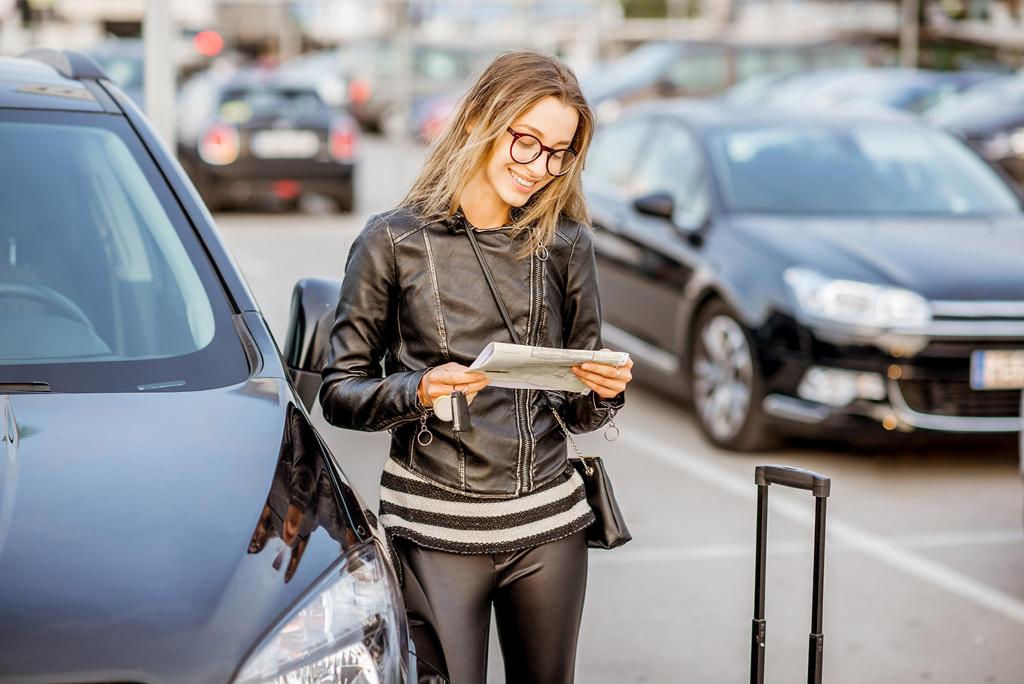
Planning to pick up a rental car? Follow these car rental tips to know exactly what to bring with you for a seamless start to your journey.
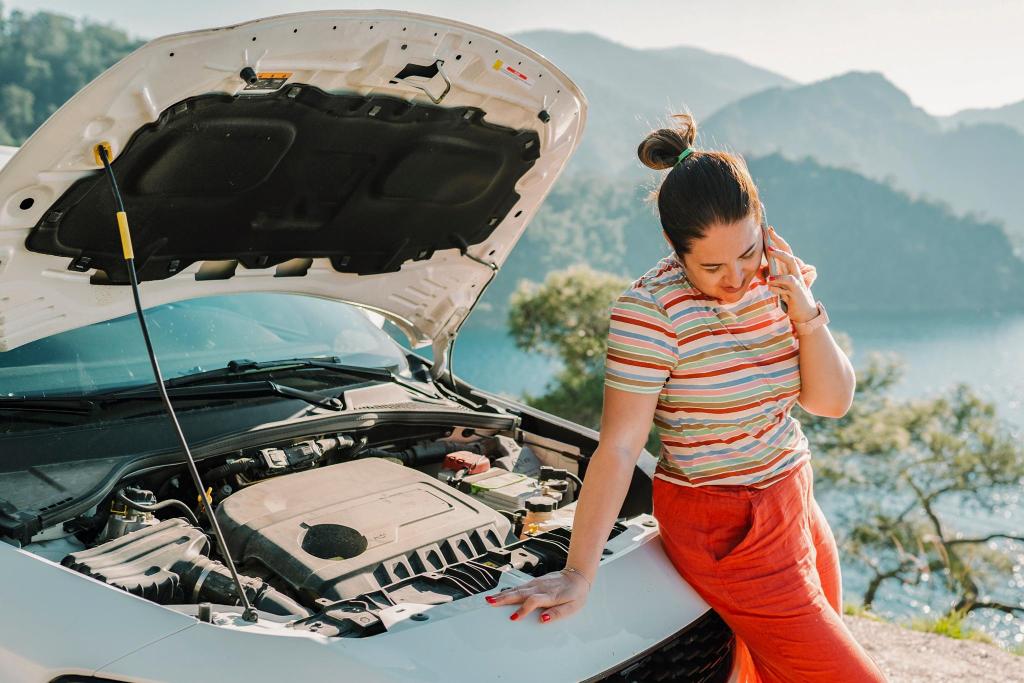
Involved in a rental car accident? Discover essential steps to take rental car after accident steps to take after an accident in a rental car.
Learn 8 practical car rental tips to save on your next car rental, from booking strategies to avoiding hidden fees.
Returning your rental car doesn't have to be stressful. Follow our 8 easy steps for a hassle-free experience and save time and effort.