How many carry-on bags are allowed per person?
Personal items and carry-on bags are both hand-carried on the plane. However, airlines make a clear distinction between the two:
- A personal item is smaller, must fit under the seat in front of you, and usually free – think, small backpack, purse, or briefcase
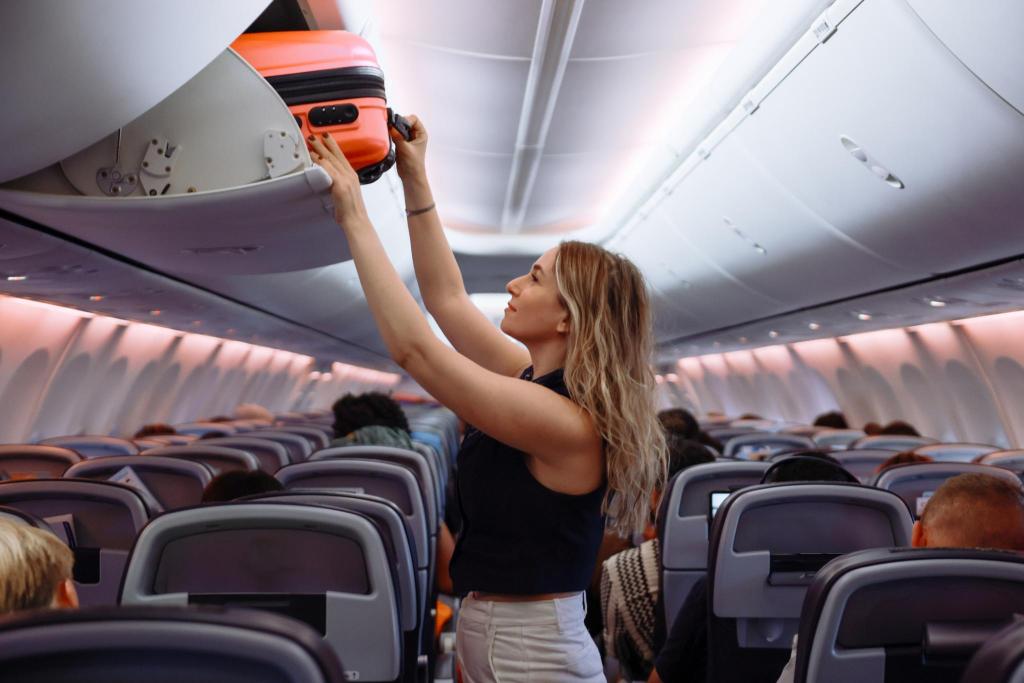
- A carry-on is a larger piece of luggage that passengers can bring onboard to be stored in the overhead bin, sometimes for an extra fee – this can be a small suitcase or duffle
If you’ve ever stood at a boarding gate juggling a suitcase, backpack, and shopping bag, you’ve probably wondered: how many carry-on bags are allowed per person? We've all been there, but the answer isn’t always straightforward, as it depends on the airline, your ticket type, and whether you’re flying internationally or within the same country. Some airlines allow one free carry-on plus a personal item, while others charge extra unless you upgrade.
With varying policies, it can get quite confusing. This guide explains some policies for different airlines, clarifies the difference between a carry-on vs a personal item, and answers some of the most frequently asked questions about cabin luggage. Knowing the policies before you fly can save you money and the stress of trying to repack your luggage while everyone else is boarding.
Carry-on baggage policies explained
When it comes to carry-ons, not all baggage is treated equally. Airlines set their own policies, but generally, passengers can expect a combination of free allowances and paid upgrades. Some airlines enforce a strict one-bag policy, while others permit an additional personal item at no extra charge. Premium tickets often offer more generous baggage benefits. Let’s break down the main scenarios – what's included for free, what may require payment, and how your class of travel affects the policies.
Free
Most airlines allow at least one free personal item, such as a backpack, handbag, or laptop bag. Depending on your ticket, you might also receive a free full-size carry-on. However, budget carriers are often stricter, requiring passengers to pay for overhead baggage unless they have purchased a higher class fare.
Paid
If your ticket only includes a personal item, you can usually pay to bring one carry-on bag. Costs vary widely depending on the airline, route, and when you purchase the add-on. Paying online in advance is generally cheaper than adding luggage at the airport. Low-cost carriers or basic fare tickets typically charge for overhead bin space. Sometimes, it's more affordable to opt for a higher-class ticket that includes bags rather than paying separately for them with a basic fare.
Depends on the flight class
Flying in economy often comes with the most restrictions. Premium economy, business, and first-class passengers usually enjoy more generous allowances, often including two pieces of hand luggage, a personal item, and sometimes higher weight limits. International flights may also offer more baggage allowance than domestic.
Carry-on vs personal item: What’s the difference?
Personal items and carry-on bags are both hand-carried on the plane. However, airlines make a clear distinction between the two based on size and cost. Understanding the difference between a carry-on versus a personal item is key to avoiding fees or confusion at the gate.
Carry-on baggage
A piece of luggage that passengers can bring into the aircraft cabin and store in the overhead bin. It's different from checked baggage, which is stored in the cargo hold. Carry-on baggage must comply with specific size and sometimes weight limits set by the airline. Some airlines require passengers to fit their baggage into a measuring device before boarding, especially if the flight is full. If your carry-on baggage doesn't fit in an overhead bin, it must be checked.
- Common size: 9 x 14 x 22 in”, including wheels and handle, varies per airline.
- Examples: Wheeled suitcases, duffels, or larger backpacks.
- Placement: Overhead bin.
- Fee: Yes, unless included in your fare.
- Oversized: If it exceeds the size limit, it must be checked for a fee.
Personal item
A personal item is smaller and should fit under the seat in front of you. Most airlines allow passengers to bring one personal item on board.
- Common size: 9 x 10 x 17 in”, varies per airline.
- Examples: Purses, laptop bags, diaper bags, or small backpacks.
- Placement: Under the seat in front of you.
- Fee: Free.
- Oversized: If the item doesn't fit under the seat in front of you, it would be considered a carry-on and subject to a fee.
Exceptions
Certain items, such as strollers, mobility aids, car seats, and those purchased after security (duty free), may be accepted as exceptions and not counted towards the carry-on allowance. These items can be taken to the gate, where they'll be tagged and await you as you deplane at your destination. If it's a full flight, some airlines may offer to check your carry-on free of charge to ensure there's space on board.
There are also some exceptions when flying with infants. Most airlines allow you to bring a diaper bag along with your carry-on and personal item at no extra cost, provided it fits within the size limits.
Different airline policies for carry-on baggage

When it comes to carry-on baggage and personal items, policies vary between airlines. Some allow both a carry-on and a personal item, while others charge extra. Upgraded classes might permit an additional carry-on, and some airlines charge more for carry-ons than for checked luggage. If you're unsure whether your baggage will fit, use the baggage sizes at the airport. Make sure to check policies before booking to find the best fare for your travel style and budget, especially when flying with multiple airlines, as policies can change.
Here’s a breakdown of what to expect from major carriers:
Alaska Air
Alaska Air allows passengers one carry-on bag and one personal item, free of charge. No additional baggage can be purchased for carry-on.
- Personal item allowed: Yes, it must fit under the seat in front of you.
- Carry-on allowed: Yes, it must fit in the overhead bin (max. 22 x 14 x 9 in”) and must fit in the sizer at the airport.
United Airlines
United Airlines permits one free personal item for basic economy passengers, but a full carry-on is only included if you upgrade. Standard economy and higher classes receive one carry-on and a personal item free of charge.
- Personal item allowed: Yes, must fit under the seat in front of you (max. 7 x 10 x 9 in”).
- Carry-on allowed: It depends – it's free only if included in your fare and fits in the overhead bin (max. 22 x 14 x 9 in”).
Delta
Delta includes one carry-on bag and one personal item for all ticket types, even basic economy. Policies may vary for Delta Connection flights based on location.
- Personal item allowed: Yes, must fit under the seat in front of you.
- Carry-on allowed: Yes, must fit in the overhead bin (max. 22 x 14 x 9 in”).
American Airlines
American Airlines permits one carry-on and one personal item per passenger across all cabin classes. Oversized carry-ons will need to be checked, often for a fee.
- Personal item allowed: Yes, must fit under the seat in front of you (max. 18 x 14 x 8 in”).
- Carry-on allowed: Yes, must fit in the overhead bin (max. 22 x 14 x 9 in”) and must fit in the sizer at the airport.
British Airways
British Airways allows economy passengers to bring one carry-on bag and one personal item free of charge. Club Europe and Club World tickets permit additional carry-on bags
- Personal item allowed: Yes, must fit under the seat in front of you (max. 16 x 12 x 6 in”).
- Carry-on allowed: Yes, must fit in the overhead bin (max. 22 x 18 x 10 in” and must not exceed 50lbs).
Air Canada
Air Canada permits one carry-on bag and one personal item per person for transatlantic and certain international flights. For Air Canada's Economy Basic fare, passengers may bring one personal item but no carry-on baggage for travel within Canada, to and from the U.S. (including Hawaii and Puerto Rico) and to and from Mexico, Central America, and the Caribbean.
- Personal item allowed: Yes, must fit under the seat in front of you (max. 17 x 13 x 6 in”).
- Carry-on allowed: It depends on the destination. If allowed, it must fit in the overhead bin (max. 22 x 16 x 9 in”).
*The above information is sourced from the official airline websites in August 2025.
Making the most of your carry-on allowance
Now that we’ve established that baggage allowance can be confusing, a bit of planning will ensure a hassle-free flight. Understanding the difference between a personal item and a carry-on bag, and knowing how many carry-ons are permitted per person, will help you decide what to take on board and what to check. While most travelers can bring at least one carry-on and a personal item, everything depends on your airline, ticket class, and flight type. Budget airlines tend to have stricter restrictions, whereas business and first class often offer more perks. The key is to check your airline’s policies before flying, pack wisely, and follow the regulations to avoid last-minute fees at the gate.
FAQ
I have two backpacks. Do they both count as carry-ons?
Most airlines allow one carry-on bag and one personal item. As long as one of the backpacks fits within the size limit of a personal item and can be stored under the seat in front of you, you can bring both. If both backpacks exceed the personal item dimensions, you may be asked to check one. It's always advisable to check your airline's specific carry-on policies to avoid any issues at the airport.
Can you take two carry-on bags on a plane?
No, on most airlines, you're generally allowed to bring one carry-on bag and one personal item on a flight, not two carry-on bags. Only business or first-class tickets permit two full-size carry-ons.
Can I have a carry-on and a backpack?
Yes, as long as the backpack counts as your personal item and fits under the seat in front of you, there should be no issues. Many travelers opt for a suitcase as their carry-on and a small backpack as their personal item.

- Sfaturi de zbor
- Călătorii în general
- Ospitalitate
- Wellness
- Politici de călătorie
 A guide to NOLA airports28 noiembrie 2025
 Can you take wrapped gifts on a plane?28 noiembrie 2025
 Do I need to print my boarding pass?28 noiembrie 2025
 The ultimate guide to understanding personal items on a plane28 noiembrie 2025
 25 solo travel safety tips for your next adventure16 octombrie 2025
 How to Pack a Suitcase like a Pro16 octombrie 2025
 Can emotional support dogs fly? The policies explained1 octombrie 2025
 Expert flying tips: How to get cheap flights last minute1 octombrie 2025
 How old do you have to be to fly alone1 octombrie 2025
 The ultimate insider’s guide to Tokyo airports1 octombrie 2025
 Traveling with pets: How to fly with a dog1 octombrie 2025
 Traveling with pets: Pro tips for flying with a cat1 octombrie 2025
 A Parent’s Guide for Flying With a Baby28 martie 2025
 The Best Apps for Planning Air Travel28 martie 2025
 How to Secure Checked Luggage When Flying20 februarie 2025
 The Future of Air Travel: 8 Trends to Watch Out For10 februarie 2025
 What to Wear on a Long-Haul Flight25 decembrie 2024
 Why Do You Have to Turn on Airplane Mode When Flying?23 decembrie 2024
 Checked Baggage Rules for Flying14 decembrie 2024
 The Complete Guide for US Airline Baggage Limits24 iulie 2024
 Your Go-to Guide to Checking in at the Airport24 iulie 2024



S-ar putea să vă placă și acestea

Planning a trip to NOLA? Learn all you need to know about New Orleans airports, including MSY, Lakefront, and NAS, plus tips on which airport to fly into.

Unlock the secrets to a cost-free airport experience. Explore our airport hacks to save money while travelling effortlessly.

Cabin bag vs hold bag? Uncover the best option for budget flights and ensure a seamless travel experience without unnecessary costs.

Can dogs fly on planes to Europe? Find out about necessary vaccinations and travel regulations for pet-friendly travel.

Traveling with a damaged passport? Learn about regulations and tips for smooth travel.

Can you leave the airport during a layover? Uncover the policies and get insights on regulations and time management.