Premium vs budget airlines: what to expect on board
There are two main types of airline:
- Budget airlines, which charge low base fares in exchange for a ‘no frills’ service
- Premium (or full-service) carriers, which are more expensive but focus more on comfort and hospitality
When choosing which airline to fly with, you’ll notice that some carriers charge much more than others – even when they’re flying the same route. This is because budget airlines include fewer amenities in order to drive costs down for customers, while premium (or full-service) carriers focus more on comfort and service, which pushes up ticket prices.
So, is it worth splashing out to fly with a premium airline, or are the cost savings worth flying budget? Here’s what you need to know about premium vs budget airlines.
What is considered a budget flight?
When booking a budget flight, you’ll generally pay a low base fare, which typically covers your seat and one small piece of hand luggage. If you want any extras, such as more cabin or hold luggage, priority boarding, seat selection or in-flight meals, you’ll usually be charged extra.
These low-cost base fares can be as little as £20 for a one-way trip within Europe. Prices like this are mostly available on short haul trips (around four hours or less) within the continent.
What to expect on budget flights
The reason budget airlines can afford to offer the prices they do is their no-frills approach to air travel. So, what does stripped back aviation look like?
On a budget flight, you’ll most likely be travelling from secondary airports and terminals (for example, London Luton rather than Heathrow, or Manchester Airport Terminal 3 rather than Terminal 2). The boarding experience is often basic – sometimes you’ll be asked to reach the plane by foot or bus transfer rather than an air bridge. Priority boarding is often available, at an added cost.
On board, the seating is largely uniform. This means there’s no first or business class, and while premium economy fares may exist, this doesn’t necessarily mean a comfier seat (although you may get extra legroom or a more convenient location for disembarking). Indeed, budget seats are typically less cushioned than those on full-service flights, and there’s usually less leg room too.
If you’re used to premium flights, you will also notice a difference in on-board entertainment. Budget planes don’t feature screens on the back of each seat, and they don’t usually offer complimentary in-flight magazines either. However, some budget airlines offer on-board Wi-Fi, and others allow you to access their entertainment app on your phone.
What’s more, food and drink is not included in the fare, although you can generally purchase snacks, drinks and hot meals onboard, or bring your own. There are also no free extras, like blankets, pillows or headphones.
It’s important to remember that budget airlines are strictly regulated when it comes to baggage allowance – you’re only permitted to bring the exact size and weight of luggage you’ve already paid for. Bringing excess baggage to the airport – such as an extra case, or a larger or heavier bag – will likely lead to steep fees.
It’s also useful to understand budget airline schedules. These planes typically have very tight turnarounds, which means that a single issue can ripple throughout the day, so delays can be more likely than with a premium carrier.
What is considered a premium or full-service flight?

So, what is a premium flight? Full-service or premium flights are designed for comfort and service – not just efficiency and cost savings. This means your fare will most likely be more expensive than budget airline tickets for the same route, but it also includes much more in its base fare than a budget carrier would offer.
Your luggage, food, drink and entertainment are usually already included in the price of a premium plane ticket, and you’ll usually find your flight experience to be more comfortable than on a budget airline.
What to expect on premium or full service flights
The first difference you’ll notice when flying premium is that you’ll pay more for the same routes compared to a budget airline. This is because, on full-service or premium flights, you’ll find that the majority of services that would be considered additional extras on budget flights are already included in your base fare. In other words, the ‘frills’ come with your ticket.
A premium or full service flight ticket typically includes:
- Standard cabin baggage
- Standard checked baggage
- Seat selection
- Food and drink
- Entertainment such as seatback screens
- Travel comfort items, like a blanket, eye mask, headphones and compression socks
So, what else can you expect on a premium or full-service flight? You’re more likely to depart from and land at major airports and terminals, such as London Heathrow or Manchester Airport’s Terminal 2. Not only does this mean more airport amenities, but it also gives you a much wider choice of destinations.
Indeed, if you’re flying long-haul to or from the UK, you’re much more likely to find yourself on a premium or full-service flight. While there are some airlines that offer low-cost, no-frills intercontinental services, such as Norse Atlantic Airways, which flies from the UK to the US, most budget airlines that operate out of the UK limit their destinations to Europe.
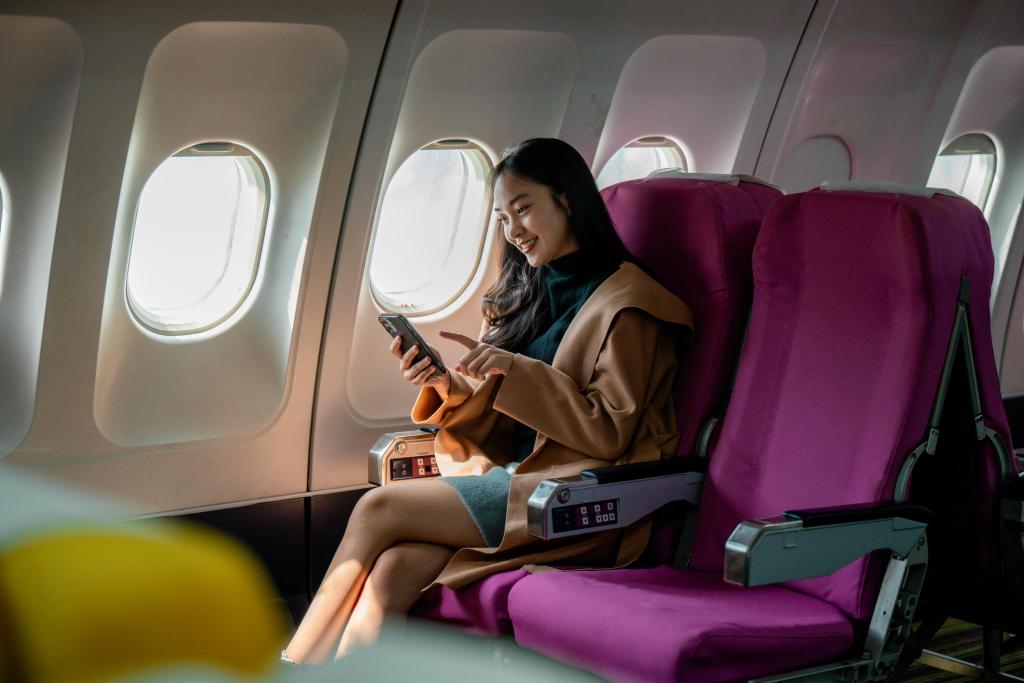
Enter the cabin on premium flights, and you’ll immediately notice several differences from budget planes. The seats are larger, more padded and more adjustable. You’ll also enjoy more legroom, personal power outlets and USBs and personal screens in the back of each seat.
When embarking a full-service flight, there’s also the option to turn left. In other words, premium cabins, such as First Class, Business Class and Premium Economy, are available in case you decide to pay more for extra comfort.
You’ll also likely notice a difference in cabin service. Premium airlines put a focus on hospitality, rather than just efficiency, and generally have more staff members available to tend to passengers’ needs. Additionally, premium airlines often run loyalty schemes, allowing passengers to earn miles or points and exchange them for upgrades and other perks.
If there’s an issue with your flight – perhaps you need to change the date, or there’s a cancellation or delay – you may find that premium airlines have a high standard of customer service. Changes and cancellations are typically easier to come by (you often have to pay for these with a budget airline), and there are usually more customer service reps available to handle any issues, too.
Differences between premium and budget flights
So, let’s recap all the major differences between premium and budget flights.
Cost
You can expect to pay a higher base fare for a premium flight. While budget flights are cheaper upfront, you do have to pay extra for additional extras such as baggage, seat selection and food and drink. It’s worth taking these additional charges into consideration when deciding whether to fly with a budget or premium carrier.
In-flight service
Your in-flight service will be to a much higher standard when travelling with a premium airline. While cabin crews operating budget flights are generally focused on efficiency, staff on full-service flights are expected to deliver world-class hospitality. Not only will you likely find cabin crew to be more attentive during premium flights, but they also serve free food and drinks and hand out comfort items such as blankets and eye masks.
Dining options
On a premium flight, you’ll likely be served a hot meal (or several, if you’re travelling long haul), and regularly offered complimentary snacks and drinks. And if you want more to eat or drink while in the air, just ask a flight attendant. All of this is included in your base fare.
If you want food or drink on a budget flight, you’ll need to pay for it separately.
This could mean:
- Ordering and paying for an in-flight meal when booking your flight (this option is not available on every flight)
- Ordering and paying for snacks and drinks while on board the aircraft
- Bringing your own snacks in your hand luggage – remember, this food will need to be solid and mostly dry to pass security checks
- Buying non-alcoholic beverages at the airport (after clearing security) to drink onboard.

Type of aircraft
The type of plane you’ll travel on depends both on the sort of airline you’re flying with and whether you’re on a long-haul or short-haul journey.
Generally speaking, budget airlines operate single-aisle narrow-body jets such as the Boeing 737 or Airbus A319. These planes typically have two rows of seats and one central aisle, with less legroom and no business or first class.
While premium airlines also use similar narrow-body aircraft for short-haul European routes, these planes do usually offer business class seating, some extra amenities such as power outlets and slightly more legroom.
Flying long-haul with a premium airline? You’re in for a treat. These airlines operate wide-body planes, such as the Boeing 777 or Airbus A330, on these routes. They usually have three rows of seats, two aisles and premium cabins including Premium Economy, Business and First. The seats are comfier, you’ll have more legroom and entertainment is typically provided via a personal screen on the back of the seat in front of you.
The exception is if you’re flying long-haul with a low-cost airline, in which case you may travel on a twin-engine wide-body aircraft such as a Boeing 787 Dreamliner. While this is a bigger aircraft than a traditional budget plane, amenities are limited and usually all seating is economy (although there may be economy plus).
Seating class
As outlined above, you have more options when it comes to seating class on a premium flight vs a budget journey. Premium aircraft usually have First and Business Class seating, as well as Economy – and sometimes there’s a Premium Economy option too.
Go with a true premium airline, and you’ll also have the option of a First Class suite. This is essentially like having your own private room on board, complete with an en-suite bathroom and chef-prepared gourmet meals.
In contrast, budget airlines typically only offer economy seating, although for an extra fee you can usually select extra legroom.
Baggage policies
Flying with a budget airline? Your fare will usually include one small under-seat cabin bag. This bag must fit within the dimensions and/or weight limit outlined on the airline’s policy. If you want to bring more or larger cabin bags on board, or check any luggage into the hold, you’ll need to pay extra at the time of booking.
With a full-service airline, passengers are usually permitted to bring one cabin suitcase plus a personal item onboard. Again, the exact weight and dimensions will depend on airline policy. One checked bag is usually included in your fare too, although some premium carriers now offer hand baggage-only fares on short-haul journeys too. If you need extra bags, you can add them onto your ticket for an extra fee.

- Solorejser
- Budgetrejser
- Gode råd om flyrejser
- Eventyrrejser
- Storbyferier
 Airport hacks: how to make it through without spending money28. november 2025
 Budget flights: cabin bag vs hold bag28. november 2025
 Can dogs fly on planes to Europe?28. november 2025
 Is airport fast track worth it?28. november 2025
 Premium airport lounge: pros, cons and what to expect28. november 2025
 The complete guide to driving in France for UK travellers28. november 2025
 The complete guide to driving in Greece for UK travellers28. november 2025
 Where do dogs go on a plane?28. november 2025
 17 tips to manage a fear of flying16. oktober 2025
 18 travel tips for first-time flyers16. oktober 2025
 20 airport hacks from seasoned travelers16. oktober 2025
 What to pack in your carry-on luggage: Everything you need16. oktober 2025
 Holiday car hire: the ultimate guide to driving in Europe1. oktober 2025
 How to get an International Driving Permit1. oktober 2025
 The complete guide to driving in Italy for UK travellers1. oktober 2025
 The complete guide to driving in Spain for UK travellers1. oktober 2025
 The complete guide to London airports1. oktober 2025
 The ultimate Bangkok airport guide1. oktober 2025
 Travel to Europe from UK: everything you need to know1. oktober 2025
 What is an automatic car in car rental?1. oktober 2025
 Should you rent a manual or automatic car?4. august 2025
 One-Way vs Round-Trip Flights: What's the Difference?28. marts 2025
 Domestic vs International Flights: What Are the Differences?24. februar 2025
 Top Tips for Booking Multi-City Flights30. december 2024
 What Happens if You Miss Your Flight?10. december 2024
 What Can’t You Take On A Plane?15. august 2024
 How To Choose The Best Seats On A Plane24. juli 2024
 How to Find and Book Affordable Flights24. juli 2024



Måske kan du også lide disse

Planning a trip to NOLA? Learn all you need to know about New Orleans airports, including MSY, Lakefront, and NAS, plus tips on which airport to fly into.

Unlock the secrets to a cost-free airport experience. Explore our airport hacks to save money while travelling effortlessly.

Cabin bag vs hold bag? Uncover the best option for budget flights and ensure a seamless travel experience without unnecessary costs.

Can dogs fly on planes to Europe? Find out about necessary vaccinations and travel regulations for pet-friendly travel.

Traveling with a damaged passport? Learn about regulations and tips for smooth travel.

Can you leave the airport during a layover? Uncover the policies and get insights on regulations and time management.