
Where do dogs go on a plane?
Where do dogs go on a plane? There’s usually two options: the cabin or cargo hold. Airlines try to minimize stress for dogs flying in the cargo hold by:
- Keeping noise in the climate-controlled hold to a minimum
- Keeping lights dim
- Board pets last and unload them first
Maybe you’re off on a lengthy holiday and don’t want to leave your furry best friend at home. Or perhaps your whole family (humans and canines) is relocating abroad? There are plenty of reasons you might need to fly with your dog, but the process can be stressful, for both owners and pets.
To make the journey easier on you both, it’s vital to research exactly what kind of experience your dog will have when travelling by air. You can then take action to make this process as smooth as possible.
Your first question is likely to be whether your dog will be kept in the cargo hold, alongside your luggage or whether they’ll be allowed to fly with you in the cabin. Here’s everything you need to know about where dogs go on planes.
Cargo hold or cabin: where do dogs go on a plane?
Are dogs allowed on planes? In short, yes – but not every airline permits dogs on board. Different airlines have different rules about exactly how animals are transported.
So, will your dog be permitted to travel in the plane’s cabin, or will they need to be put in the cargo hold? It depends!
Cabin
Dogs flying in plane cabins is not a common occurrence in and around the UK.
To start with, there are no UK-based commercial airlines that allow dogs to travel in the cabin. While some European carriers – such as KLM, Lufthansa, Air France and Iberia – do permit small dogs in the cabin, they are still not allowed to travel in the cabin when flying into the UK.
However, these dog-friendly airlines may allow you to travel with a pet under a certain weight (around 8 kilograms is the usual limit) in the cabin when leaving the UK. Just remember, you’ll still need to put them in the cargo hold on your return journey.
There are a couple of other exceptions in which dogs may be allowed in UK cabins, including:
- Recognised assistance dogs, which are generally permitted to travel in cabins for free.
- Private jets may allow dogs in cabins – this is at the discretion of their operator and the rules of the destination country.
- Charter flights might permit dogs in cabins, again depending on their operator and which country you’re flying into.
Cargo
For the most part, if you’re travelling to and from the UK with your dog, they’ll make the journey in the cargo hold.
However, it’s important not to assume that every airline permits dogs on board. Indeed, when it comes to UK airlines, British Airways, TUI and Aer Lingus UK are the three main carriers that transport pet dogs in the cargo hold. Meanwhile, popular budget airlines like easyJet and Ryanair don’t allow pet dogs on planes at all, whether in the cabin or the hold.
The UK government has a long list of international airlines that are approved when it comes to transporting dogs to and from the UK in their holds.
Some of the most popular include:
- Aer Lingus
- Air Canada
- Air France
- American Airlines
- British Airways
- Cathay Pacific
- Emirates
- Etihad Airways
- KLM Royal Dutch Airlines Cargo
- Qantas
- Singapore Airlines
- TUI Airways
Cargo hold conditions for your pet dog
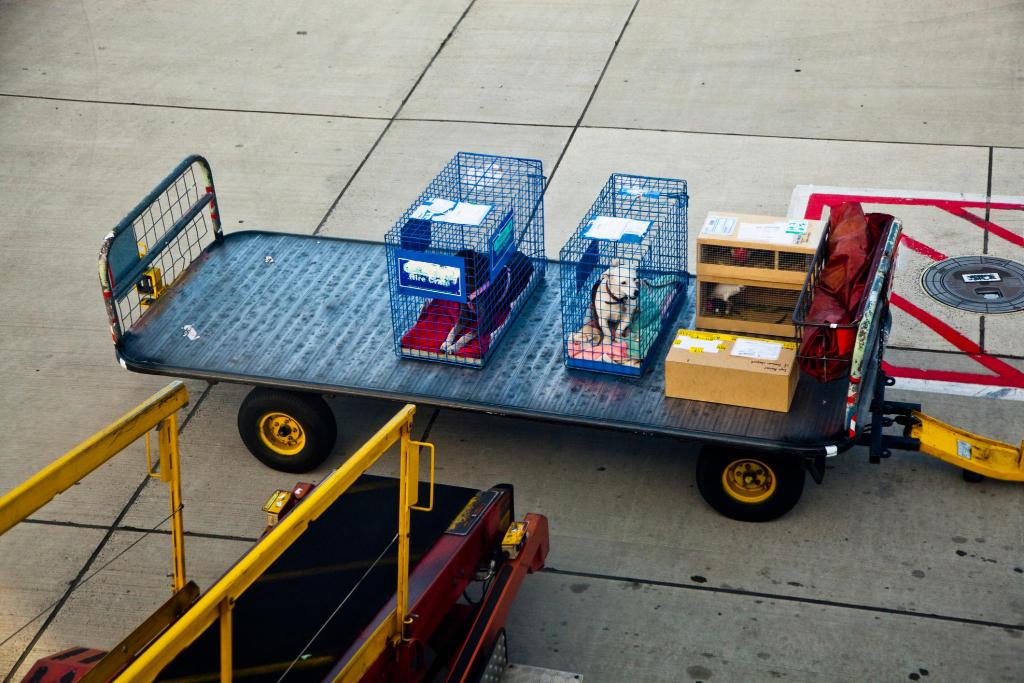
If you’re going to entrust your dog’s wellbeing to an airline, you want to know they’ll be well looked after. The exact conditions in the cargo hold will vary from airline to airline, so the best way to ensure you’re happy is to look at your airline’s policy and contact a representative if you have any questions.
Many airlines are members of the International Air Transport Association (IATA), which means they must comply with a set of global standards for transporting animals. You can see which airlines are IATA members here. Carriers must also fall in line with country-specific regulations, which typically cover things like time spent in holding areas, ventilation, the availability of food and water and temperature thresholds.
Let’s explore what you can generally expect when you transport a pet in the cargo hold of a reputable, IATA member airline.
Special climate-controlled cargo compartments for your pet
Most modern planes that allow dogs in the cargo hold offer special climate-controlled cargo compartments for animals. Airlines like Lufthansa, KLM and Air France, have special live animal compartments that are monitored and kept within safe temperature and pressure limits.
While not every airline offers a dedicated cargo compartment just for pets, every carrier is required to place pets in a section of the hold that is:
- Pressurised in the same way as the passenger cabin
- Temperature-controlled
- Ventilated
Dog comfort
While travelling in the hold is not quite the same experience as being permitted in cabins, many airlines do take measures to make the experience as comfortable as possible for our pets.
These measures generally include:
- Keeping noise to a minimum: the animal section is typically quieter than other areas in the cargo hold, with airlines attempting to keep noise from loud equipment as low as possible around animals.
- Low lights: dim lighting is often used in a bid to reduce any stress on animals.
- Handling procedures: pets are boarded last and unloaded first in order to limit the amount of time they are physically in the hold.
- Professional animal handlers: many airlines have dedicated staff trained in animal handling to help keep pets’ stress levels low.
A few airlines also offer extra measures, including special climate-controlled animal lounges for layovers, where staff will monitor their condition and real-time tracking to give owners peace of mind.
Some airlines will also restrict specific breeds from travelling during the hottest and/or coldest times of year to prevent extra stress and health risks. To find out more, check with your airline.
Want to know what you can do to make your dog’s journey less stressful? Book direct flights only to minimise handling and avoid extreme weather conditions where possible.
End-to-end dog transport
Some airlines have established partnerships with professional pet transport agencies in a bid to make travelling with your pet as smooth as possible.
For example, British Airways works with PetAir UK, which is a service operated by fully-qualified veterinary surgeons, to transport dogs out of the UK. They deal with the paperwork, health checks, pet cabins, bedding, tracking and destination handling in order to provide a door-to-door service. For return journeys, BA partners with IAG Cargo, who deliver a similar service.
It’s important to note that BA classifies pets as manifest cargo. This means they are booked onto flights using the cargo system, not the passenger system. While the majority of the time they will be booked onto the same flight as you, this booking system means they may occasionally need to travel on a different one.
Elsewhere, Aer Lingus also works with IAG Cargo. Pets need to be booked for transport within the plane’s cargo hold through an IAG Cargo agent, who will meet you at the airport on the day of your departure.
Checklist: flying with dogs

Ahead of your journey, you’ll need to ensure your pet dog has everything they need for a comfortable flight. If you’re using an end-to-end pet transport service, it may cover the below checklist, but it’s essential to check ahead of time.
So, what do you need to do ahead of your dog’s flight to ensure their comfort? Here’s a handy checklist.
- Buy an airline-approved kennel: you’ll need to purchase an airline-approved, IATA-compliant dog kennel. It should be big enough for your dog to stand, turn around and lie comfortably in.
- Acclimatise your dog to their kennel: starting weeks before the flight, take steps to get your dog used to the airline-approved kennel. Let them sleep in it, feed them inside it and generally make it a space they associate with positive things.
- Gather comfort items: these could be a blanket that smells like home or a favourite toy. Check with your airline exactly what’s allowed in your dog’s crate ahead of time.
- Install bedding: you will need to line the kennel with absorbent bedding, such as puppy pads, vet bedding or blankets.
- Provide water and a container: attach a spill-proof water container to the kennel, and freeze their water ahead of time so it melts slowly during the flight, to avoid spillages.
- Feed your dog: try to feed your dog a light meal around 4–6 hours before you drop them off. You don’t want them to be too full, or too hungry. You may need to provide food for their journey (especially if they have special dietary requirements), but it’s unlikely they’ll eat while in the air. Check with your airline for guidance around feeding.
- Exercise before the flight: take your dog on a long walk before their flight so they’re tired and calmer.
- Label the kennel: clearly mark the kennel with a ‘LIVE ANIMAL’ label, alongside your contact details, feeding instructions and your dog’s name.
- Arrive at the airport early: when it comes to transporting your pet safely and calmly, the last thing you want to do is rush. Arrive at the airport in a timely manner – many airlines require pet check-in at least 2–3 hours before departure.
Before your dog’s departure date, you’ll also need to work your way through a to-do list surrounding their health and documentation. Exactly what you need to do will depend on where you’re flying from and to – you can find out more on the government website.
Pet travel FAQ

Is pet travel stressful?
There’s no getting around the fact that pet travel can be stressful for dogs. After all, they’re in an unfamiliar environment, without you and they will likely experience temperature and pressure changes.
However, most airlines take measures to reduce the stress of animals in transit, including:
- Keeping pets in dimmer, quieter cargo hold zones compared to where bags are stored
- Having professionally trained animal handlers on staff
- Boarding pets last and unboarding them first
- Offering dedicated animal facilities with climate control, rest areas and monitoring during layovers
Does anyone look after pets during air travel?
Yes, typically airlines will put people in place to look after your pet dog during their journey. These people may include ground staff and cargo handlers, people to care for pets during layovers and – in some cases – staff from pet relocation companies.
However, airlines do not provide in-flight companions for pets, and the level of care varies depending on your carrier. To make sure you’re happy with the standard of care your pet will receive, check your airline’s policy.
Where in the aircraft will my pet go?
If you’re flying to or from the UK, your pet will most likely be transported in the cargo hold. In fact, no UK-based commercial airlines allow pet dogs in the cabin.
There are a few exceptions where dogs may be allowed in the plane cabin, including:
- Recognised assistance dogs, which are generally permitted to travel in cabins for free
- Private jets
- Charter flights
Some European airplanes may allow small dogs (usually up to 8 kilograms) in the cabin when flying out of the UK to specific destinations.
Can I put a litter tray in the flight kennel?
Litter trays are not usually permitted in flight kennels. This is because they take up too much space, restricting your dog’s movements and can cause a safety hazard should they spill during turbulence or handling.
Where do dogs go to the toilet on a plane? Owners are required to line the floor of the crate with absorbent material, such as vet bedding, shredded paper or puppy pads.

- Solorejser
- Budgetrejser
- Gode råd om flyrejser
- Eventyrrejser
- Storbyferier
 Airport hacks: how to make it through without spending money28. november 2025
 Budget flights: cabin bag vs hold bag28. november 2025
 Can dogs fly on planes to Europe?28. november 2025
 Is airport fast track worth it?28. november 2025
 Premium airport lounge: pros, cons and what to expect28. november 2025
 Premium vs budget airlines: what to expect on board28. november 2025
 The complete guide to driving in France for UK travellers28. november 2025
 The complete guide to driving in Greece for UK travellers28. november 2025
 17 tips to manage a fear of flying16. oktober 2025
 18 travel tips for first-time flyers16. oktober 2025
 20 airport hacks from seasoned travelers16. oktober 2025
 What to pack in your carry-on luggage: Everything you need16. oktober 2025
 Holiday car hire: the ultimate guide to driving in Europe1. oktober 2025
 How to get an International Driving Permit1. oktober 2025
 The complete guide to driving in Italy for UK travellers1. oktober 2025
 The complete guide to driving in Spain for UK travellers1. oktober 2025
 The complete guide to London airports1. oktober 2025
 The ultimate Bangkok airport guide1. oktober 2025
 Travel to Europe from UK: everything you need to know1. oktober 2025
 What is an automatic car in car rental?1. oktober 2025
 Should you rent a manual or automatic car?4. august 2025
 One-Way vs Round-Trip Flights: What's the Difference?28. marts 2025
 Domestic vs International Flights: What Are the Differences?24. februar 2025
 Top Tips for Booking Multi-City Flights30. december 2024
 What Happens if You Miss Your Flight?10. december 2024
 What Can’t You Take On A Plane?15. august 2024
 How To Choose The Best Seats On A Plane24. juli 2024
 How to Find and Book Affordable Flights24. juli 2024



Måske kan du også lide disse

Planning a trip to NOLA? Learn all you need to know about New Orleans airports, including MSY, Lakefront, and NAS, plus tips on which airport to fly into.

Unlock the secrets to a cost-free airport experience. Explore our airport hacks to save money while travelling effortlessly.

Cabin bag vs hold bag? Uncover the best option for budget flights and ensure a seamless travel experience without unnecessary costs.

Can dogs fly on planes to Europe? Find out about necessary vaccinations and travel regulations for pet-friendly travel.

Traveling with a damaged passport? Learn about regulations and tips for smooth travel.

Can you leave the airport during a layover? Uncover the policies and get insights on regulations and time management.